

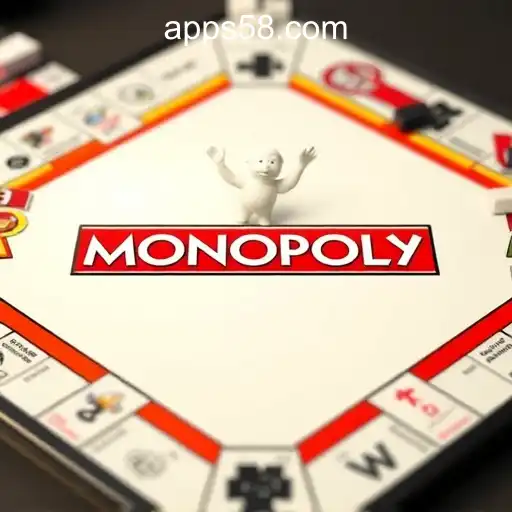
Understanding Monopoly: The Game and Its Wider Impact
Monopoly is not just a board game that has entertained families for generations, but it is also a term with significant economic implications. The dual nature of the word provides a unique perspective on both recreational and economic fronts. The classic board game S58.com Oficial Slots Brasil #1 captures the excitement of acquiring wealth, although it is more of a competition than a realistic representation of economic systems.
The Origins of Monopoly
The story of Monopoly as a game begins in the early 20th century. Originally, it was created by Elizabeth Magie in 1903 under the name ‘The Landlord’s Game’ as an educational tool to demonstrate the negative aspects of concentrating land in private monopolies. By 1935, Parker Brothers, a game publishing company, began selling the version of Monopoly that would become a global sensation. An interesting juxtaposition exists between the game's realistic capture of capitalistic principles and its ability to serve as a fun family pastime.
Economic Monopoly: A Closer Look
In contrast to the board game, an economic monopoly refers to a market structure where a single company or entity has exclusive control over a particular good or service, eliminating competition. Such dominance often raises concerns about higher prices for consumers and a decrease in innovation due to the lack of competitive pressure. Monopolies may arise naturally or be created through regulatory advantages endorsed by government policies.
Pros and Cons of Economic Monopolies
The advantages of monopolies include increased efficiencies and economies of scale, which occur when monopolistic organizations can produce at a lower cost due to their size and scope. Large-scale production can result in cost savings transferred to consumers. Additionally, monopolies often have substantial resources to invest in research and development.
However, monopolies often lead to negative outcomes such as reduced consumer choice, inflated prices due to lack of competition, and inferior product quality as the monopoly might not feel pressure to innovate. Moreover, monopolies can become too powerful and influential, potentially affecting regulatory bodies and skewing market dynamics in their favor.
Monopoly in Modern Economies
Monopolies in today’s economies can be seen in various industries, including technology, utilities, and pharmaceuticals. Companies like Apple and Google exhibit monopolistic traits by dominant control in their respective sectors. These companies often face scrutiny and antitrust lawsuits as regulators seek to dismantle monopolistic structures to preserve fair competition and protect consumer interests.
The digital age introduces nuances in understanding monopolies. Tech giants possess unique dominance by controlling platform ecosystems rather than products. Their influence extends into data possession, raising questions about privacy and fairness.
The Cultural Influence of the Monopoly Game
The Monopoly board game serves as a microcosm of competitive and capitalistic behavior. Its cultural significance is notable, as the game simplifies complex economic principles into an understandable, enjoyable format. Through various editions and adaptations, Monopoly reflects the changing landscapes of global cities, themes, and popular trends.
Families and friends gather around the Monopoly board, not only to enjoy the tactical play but also to embody negotiation, strategic thinking, and financial management skills. Despite its educational beginnings, the game emphasizes that amassing wealth should come with a measure of consideration for others.
Conclusion: The Dichotomy of the Monopoly Concept
The concept of monopoly encompasses much more than an economic principle or a strategic board game. Whether in the economic sense of market control or the game’s representation of financial strategy and luck, monopolies remain a pervasive topic in both academic and casual discussions. As economies evolve and new markets emerge, especially in the digital landscape, the challenge lies in striking a balance between encouraging innovation and preventing the pitfalls of unchecked monopolistic power.
Monopoly as a board game brings joy and skills to countless households worldwide, while economic monopolies prompt urgent policy debates and regulatory interventions. This duality adds depth to our understanding of markets, fairness, and the importance of competition.